
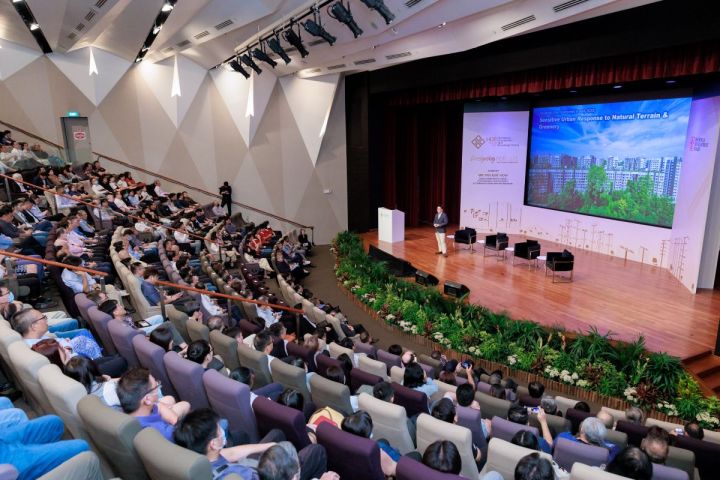
Conference event photography is one of those services that companies often only think about a few weeks before the event itself. By then, the good crews are usually already booked. For anyone in Singapore planning a conference, whether it is a single-day industry seminar or a multi-day, multi-track MICE event, it helps to understand what conference event photography actually involves.
This guide breaks down what conference event photography covers, what to expect from a professional crew on the day, and how to plan for it properly. Along the way, we spoke with the photographers at Vivid Media, a Singapore-based multi-disciplinary media production company, to get their take on the techniques they rely on when shooting large-scale conferences.
- What Does Conference Event Photography Actually Cover
- Vivid Media: An Experienced Conference Event Photography Team In Singapore
- Why Conference Event Photography Needs A Team, Not Just A Photographer
- Turnaround Times For Conference Event Photography
- What Makes Conference Event Photography Different From Regular Corporate Photography
- Conference Event Videography Alongside Photography
- Where Conference Event Photography Happens In Singapore
- Exhibition Booths And Sponsor Coverage
- Insights From Vivid Media’s Conference Event Photographers
- How do you decide where to position yourself when capturing a panel discussion?
- What’s your approach to lighting when you can’t control the venue’s setup (EG: dim ballroom / a stage with harsh spotlighting)?
- How do you catch genuine audience reactions without it feeling staged or intrusive?
- If you only had time to capture five shots from an entire conference day, what would they be?
- How does the team coordinate when there are multiple photographers covering different rooms at the same event?
- If you had to describe conference photography in one sentence to someone who’s never worked in events, what would you say?
- Frequently Asked Questions About Conference Event Photography In Singapore
What Does Conference Event Photography Actually Cover
Conference event photography is broader than most first-time event organisers expect. It’s not just a photographer standing at the back of the room during the keynote. A proper conference event photography brief usually spans:
- Registration and arrival shots as delegates check in
- Keynote and panel coverage from multiple angles
- Breakout sessions running in parallel rooms
- Networking segments, coffee breaks, and exhibition booths
- Sponsor booth and branding placement shots
- Candid audience reactions and engagement moments
- Group and VIP photography for speakers or guests of honour
For larger conferences, this often means deploying more than one photographer at a time. For example, Vivid Media has covered MICE events by placing anywhere from one to eight photographers across a venue simultaneously, so that keynote coverage, breakout sessions, and off-site tours are all documented without one photographer having to sprint between rooms. This kind of scaling is one of the practical differences between conference event photography and a smaller-scale corporate shoot because it requires coordination as much as camera skill.
Vivid Media: An Experienced Conference Event Photography Team In Singapore
Vivid Media is a Singapore-based media production company whose roots lie in event coverage, with photographers who have worked across large-scale MICE conferences, hotel ballroom events, and academic institutions. Their conference event photography work spans venues including Marina Bay Sands and Changi Jewel, alongside multi-track events requiring several photographers deployed at once. Their in-house team handles both conference event photography and event videography under one roof, which organisers often find simplifies coordination on the event day itself.
Why Conference Event Photography Needs A Team, Not Just A Photographer
A single photographer can cover a small seminar comfortably. A conference with multiple concurrent tracks, an exhibition floor, and an evening networking segment is a different game entirely. This is where the value of conference event photography from an established production team becomes clear, because it is not just about who’s taking the photos, but also about who is coordinating the whole schedule.
Vivid Media’s approach to conference event photography leans on their in-house team of photographers working as a coordinated unit rather than operating independently. For events where same-day content is needed, like a recap for delegates on day two of a multi-day conference, they can also deploy on-site photo editors to process and deliver images while the event is still running. This has been used for time-sensitive productions, including live broadcasts and international conference series held at large-scale venues in Singapore.
Turnaround Times For Conference Event Photography
One of the most practical questions event organisers ask is how quickly they will receive their photos. For standard conference event photography assignments, the typical turnaround for fully edited images is 5 to 7 working days. If a faster turnaround is needed, for example to release a same-day social media post, this can usually be arranged, though it may come with a rush fee depending on the scale of the shoot and availability of editors. On-site photo editing is worth requesting in advance rather than as a last-minute add-on, since it usually requires additional manpower planning ahead of the event day.
What Makes Conference Event Photography Different From Regular Corporate Photography
Regular corporate photography happens in a controlled environment where the photographer sets the pace. Think of corporate headshots or office photos. Conference event photography is the direct opposite: the agenda dictates the pace with the sessions running in parallel, and there are no retakes. A missed handshake at a partnership signing or a missed reaction shot during a keynote can’t be reshot later.
This is why conference event photography crews typically prepare with a run sheet in hand. Crews then know which sessions matter most to the client, where VIPs will be seated, and which sponsor booths need dedicated coverage. Vivid Media’s photographers, for example, are also equipped to handle more technical requests within a conference brief, such as capturing detailed reference photos of exhibition booth setups for a client’s own internal documentation or future planning, in addition to standard event coverage. It’s also worth choosing a crew with strong familiarity with Singapore’s conference venues, from convention centres and boutique auditoriums to hotel ballrooms, since each comes with its own layout and quirks.
Conference Event Videography Alongside Photography
Many organisers booking conference event photography also end up needing companion video coverage, since event photography and event videography solve slightly different problems. Photography delivers still images for reports, press releases, and social media posts. Meanwhile, event videography captures the fluid movements, sounds, and atmosphere for highlight reels or internal communications.
Vivid Media offers both under one roof, which tends to simplify logistics for organisers who would otherwise be coordinating two separate vendors on the same event day. Their event videography services for conferences typically include roving coverage of candid moments around the venue, plus static, full-length recording of keynote stage segments, which are treated as two distinct services since the camera setups and priorities for each are different.
Where Conference Event Photography Happens In Singapore
Singapore’s conference scene runs across a wide mix of venues, and each one presents a slightly different set of challenges for a photography crew. Large-scale international conferences at convention centres and integrated resorts tend to involve multiple concurrent tracks spread across several floors, meaning coordination between photographers becomes as important as the shooting itself. Hotel ballrooms and function rooms are common for mid-sized conferences and seminars, often paired with a single stage and a more contained flow of sessions. University auditoriums and lecture theatres are also frequently booked for academic or industry conferences, which usually come with their own lighting quirks that a crew needs to work around ahead of time.
Vivid Media’s photographers have covered conference event photography across this range of venues, including large-scale international conference series held at Marina Bay Sands and broadcast coverage at Changi Jewel, alongside more contained hotel ballroom conferences and academic events at institutions such as NTU. Each of these settings demands a slightly different shooting rhythm, from managing exhibition floor traffic to working within a fixed stage lighting setup.
Exhibition Booths And Sponsor Coverage
For many conferences, the exhibition floor is where sponsors and partners expect the most attention, and it’s an area that’s easy to under-scope in a photography brief. Beyond general documentation of the space, conference event photography can also extend to more specific requests, such as reference shots of individual booth setups, which some clients use for internal reporting or to plan future events. Organisers who know they’ll need this kind of detailed booth coverage should mention it upfront, since it changes how a photography team allocates time across a busy exhibition floor versus the main stage.
Insights From Vivid Media’s Conference Event Photographers
To make this guide more useful, we sat down with photographers who cover conferences regularly to hear how they actually approach a busy event day.
How do you decide where to position yourself when capturing a panel discussion?
Lim Eu-Gene, Photographer: “I usually go down early to familiarise myself with the venue layout and understand the programme flow. That helps me anticipate where the key moments will happen. For panel discussions, the speakers are typically centred on stage, so I make sure to capture a good mix of angles. So that includes the front-facing shots, as well as from the left and right. I’ll also alternate between wide shots that show the full setup and tighter close-ups of each speaker. The goal is to cover every important angle, so nothing gets missed.”
What’s your approach to lighting when you can’t control the venue’s setup (EG: dim ballroom / a stage with harsh spotlighting)?
Benjamin Low, Media Creative: “In those situations, it’s really about adapting on the spot. I will adjust my camera settings depending on the lighting conditions, like ISO, shutter speed, and aperture, to get the best possible exposure. If needed, I’ll also increase my flash power to balance things out, especially in dim environments. It’s more about making sure the subject is still clear and usable than making sure the lighting is perfect.”
How do you catch genuine audience reactions without it feeling staged or intrusive?
Lim Eu-Gene, Photographer: “A lot of it comes down to reading the room. I try to gauge the overall vibe of the panel. Some sessions are more serious, while others are more relaxed and engaging. When the speakers are lively or joking around, the audience tends to respond more naturally, and that’s when you get those genuine reactions. There’s also a bit of luck involved, but being observant and ready helps a lot.”
If you only had time to capture five shots from an entire conference day, what would they be?
Benjamin Low, Media Creative: “I would focus on the essentials: three key speakers, one wide shot of the venue to establish the scale of the event, and one panel discussion. That combination usually gives a good overall summary of the conference.”
How does the team coordinate when there are multiple photographers covering different rooms at the same event?
Lim Eu-Gene, Photographer: “We ask for the programme flow in advance so that, again, we can familiarise ourselves with the layout and anticipate key moments. Before the event, we go through the programme flow together, discuss it, and assign each photographer to specific rooms or segments. That way, everyone knows exactly where they need to be. For larger events with a main hall and concurrent sessions, this is especially important. Clear communication and planning upfront help make sure all key moments are covered without overlap or confusion.”
If you had to describe conference photography in one sentence to someone who’s never worked in events, what would you say?
Benjamin Low, Media Creative: “It’s challenging but very informative, and you always have to be ready for the unexpected.”
Frequently Asked Questions About Conference Event Photography In Singapore
How many photographers do I need for a conference?
It depends on how many concurrent sessions are running. A single-track, single-day seminar can typically be covered by one photographer, while a multi-track MICE conference with breakout sessions and an exhibition floor may need several photographers working simultaneously to avoid gaps in coverage.
How long does it take to receive edited conference photos?
Standard turnaround for conference event photography is typically 5 to 7 working days for edited images. Same-day or next-day delivery is possible with on-site editing support, arranged in advance.
Can the same team handle both photography and videography at a conference?
Yes. Vivid Media, for example, provides both conference event photography and videography as part of the same brief, which is often more practical for organisers than coordinating separate vendors for stills and video on the same day.
What’s the difference between conference event photography and general corporate photography?
Conference event photography happens in real time against a live agenda with no opportunity for retakes and often requires multiple photographers working in parallel across sessions. Corporate photography, like staff portraits, happens in a controlled setting at a pace the photographer can manage.
 Lifeguide.sg